How can you tell if your plant's soil is dry?
Learn the easiest ways to tell if your plant’s soil is too dry, from visual clues to touch tests, so you can water your houseplants at the right time.

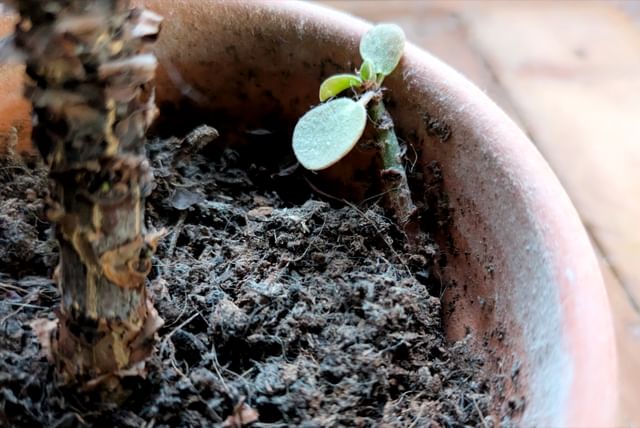
It's very easy to overwater your plants, but did you know that you can also forget about your plants too long? Soil can become too dry. But what does this look like? And what can you do to fix this? Does the type of soil make a difference?
Let's learn a little more about what it looks like when your plant's soil is too dry.
What does dry soil look like?
Dry soil is easy to see, because it looks a little dusty. One of the clearest signs that the soil is too dry is that it starts to separate from the pot. Normally, when your soil is moist, it's quite relaxed and bouncy. The soil can compress and expand, so it fills up the pot nicely.
However, when the soil becomes dry, it'll start to clump and firm up. The bounciness goes away, and it won't compress and expand anymore. The soil will start to form a singular soil brick. If you were to pull the plant out of the pot at this point, all soil will come with it cleanly and will keep the shape of the pot.
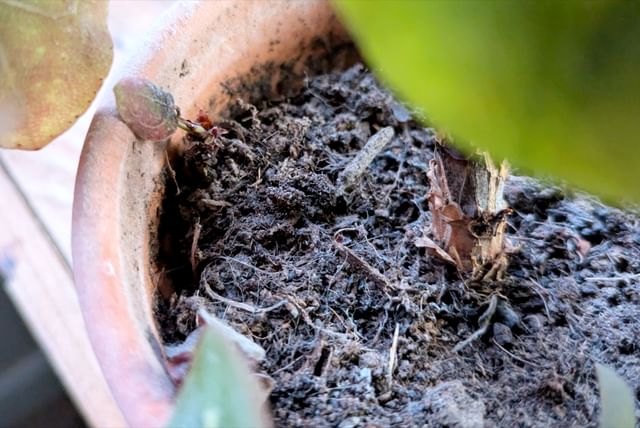
This is what that looks like. As you can see, the soil has started to separate from the pot and looks a little tired and dusty.
Can't you just water the soil?
When you see this dry soil, your first thought might be to grab your watering can and water this plant. But, this won't really work. The water won't pull into the soil, but rather float on top of it and maybe even leak through the gap between the soil and the pot. The soil will have become hydrophobic: the soil will repel water, not absorb it.
You can also see this happen in the summer when it has been warm and hot for a few weeks and the ground has dried out. When it starts raining, you'll see big puddles, because the water won't get absorbed as quickly by the soil.
So just grabbing a watering can and watering your plant won't work. But what will?
Solving the dry soil problem
One way to solve this hydrophobic soil problem is to force the soil to absorb moisture. The best way to do this is by bottom-watering your plant. Or even better: Getting a bucket, fill it with water, and put the plant with the pot in it, fully submerging the soil.
You'll want to leave the pot in that water for a little while, because the soil is still hydrophobic and won't want to absorb the moisture. But leave it long enough, and the moisture will eventually start to absorb moisture again.
Another way to help your plant, but not necessarily solve the problem, is to repot your plant and use fresh soil. This obviously doesn't solve the "dry soil problem", but it does help your plant.
Does the type of soil matter for drought-loving plants?
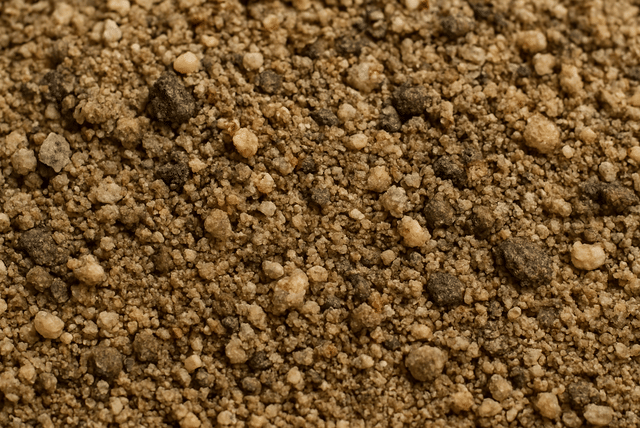
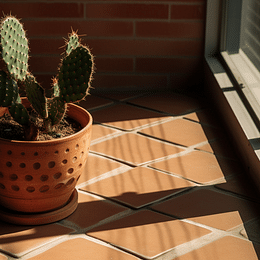
You might know that some plant actually love dry soil. Plants like cacti and succulents thrive in dry soil and prefer it if you forget about them for a while. But even these plants will struggle in this firm, clumpy, dusty soil. Why? Because the soil becomes hydrophobic and won't let any moisture near your plant's roots. Even plants that love the dry soil need moisture from time to time.
So what can you do to keep these plants happy? You've got to use soil that doesn't bounce to begin with, soil that's nutrient-poor, soil that doesn't start to clump when you forget to water it. This soil will contain coarse sand. Sand keeps the soil from clumping. Soil that has a lot of sand in it, won't hold onto a lot of moisture, but it will hold onto enough to keep your cacti and succulents hydrated.
Thank you for reading this post! I hope it helps you to keep your plants healthy and beautiful! If you're looking for more guides on specific plants, you can always request a plant guide to get a guide for the plant you have trouble with.